BRANDON MANITOBA CA
BRANDON MANITOBA
HomeInvestigationEnsayo CPT (Cone Penetration Test)

CPT (Cone Penetration Test) in Brandon Manitoba

Rigorous testing. Clear reporting.

LEARN MORE

In Brandon Manitoba, the glacial till and clay layers can be deceptive. We often see projects where a simple visual log misses key changes in soil behavior. That is why we rely on the CPT (Cone Penetration Test) for continuous, real-time data. The cone pushes through the ground, measuring tip resistance and sleeve friction every 2 cm. This method gives us a detailed soil profile without the downtime of sampling. For projects requiring both shear strength and stratigraphy, we combine CPT with presurometro readings to capture lateral stress. The results feed directly into foundation design under NBCC 2020.
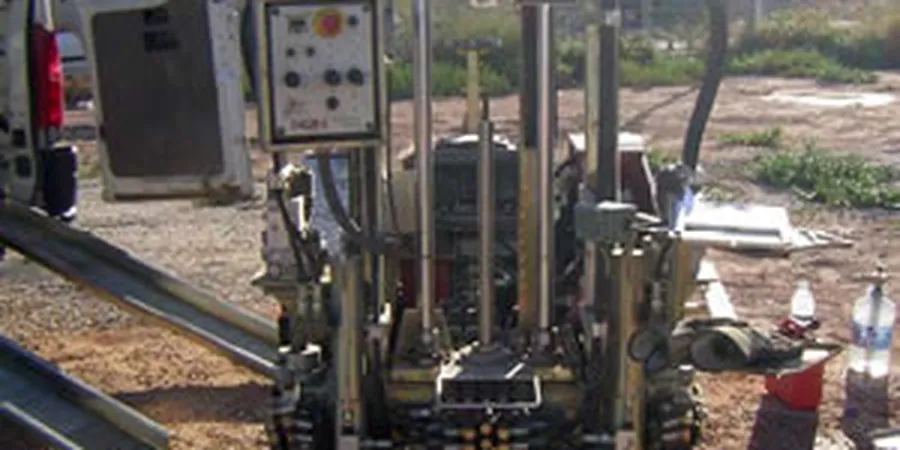
Illustrative image of Ensayo cpt in Brandon Manitoba
Continuous cone penetration profiles reveal hidden soil transitions that discrete sampling misses entirely. Real data, fewer surprises.

Our service areas

Methodology and scope

Between the Assiniboine River floodplain and the upland till areas, soils in Brandon Manitoba vary significantly. The CPT (Cone Penetration Test) handles both extremes. In soft clay near the river, the cone detects low tip resistance and high pore pressure. In dense glacial till on the escarpment, we see high tip values and low friction ratios. We use a 15-tonne truck-mounted rig with a 10 cm² cone. The test runs continuously to depths of 30 m. Pore pressure sensors track drainage conditions, critical for foundation settlement estimates. When we need soil classification, we correlate the CPT data with limites-atterberg results from boreholes. This dual approach improves accuracy.
Technical reference — Brandon Manitoba

Local considerations

Brandon Manitoba grew fast in the 20th century. Many subdivisions were built on former river terraces without proper soil testing. The risk here is variable till thickness and buried organic layers. A single borehole can miss a soft pocket entirely. The CPT (Cone Penetration Test) reduces that risk by profiling the entire column. In areas like the north end, where old channels exist, cone penetration detects loose zones that cause differential settlement. We flag these zones before foundation design. For seismic risk, we use CPT data to assess liquefaction potential per NBCC 2020.

Need a geotechnical assessment?

Reply within 24h.

Email: contact@geotechnicalengineering.xyz

Applicable standards

ASTM D5778-20, NBCC 2020, CSA A23.3-19

Technical parameters

ParameterTypical value
Tip Resistance (qc)0–50 MPa
Sleeve Friction (fs)0–1 MPa
Pore Pressure (u2)0–3 MPa
Friction Ratio (Rf)0–10 %
Depth Range0–30 m

Frequently asked questions

How deep can the CPT cone penetrate in Brandon Manitoba soils?

In the glacial till and clay layers typical of Brandon Manitoba, we routinely reach 25 to 30 m. Dense till or gravel layers can limit depth to 15 m. We pre-drill through surficial obstructions if needed.

What is the difference between CPT and standard SPT?

The CPT (Cone Penetration Test) provides a continuous, real-time soil profile without stopping for hammer blows. SPT gives discrete blow counts every 1.5 m. CPT is faster and more detailed, while SPT is better for gravelly soils. We choose based on site conditions.

How much does a CPT (Cone Penetration Test) cost in Brandon Manitoba?

Typical cost for a CPT in Brandon Manitoba ranges from CA$240 to CA$320 per test point, depending on depth and access. Volume discounts apply for multiple points on the same site.

Location and service area

We serve projects across Brandon Manitoba.

Location and service area

Explanatory video