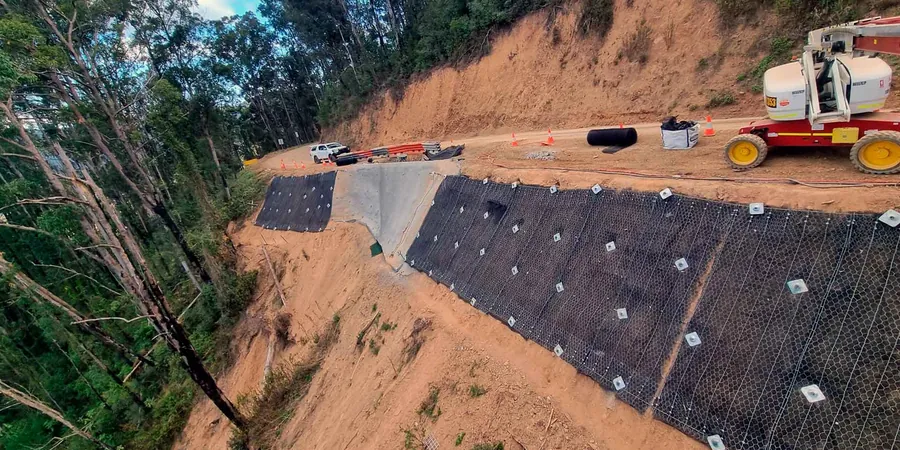
Brandon Manitoba sits on glaciolacustrine clay and glacial till, with a high water table often within 2 m of the surface. These conditions create a constant risk of rotational and translational slope failures, especially along the Assiniboine River valley. Our team performs slope stability analysis in Brandon Manitoba using limit equilibrium methods (Bishop, Spencer) and finite-element modeling. Before any cut or fill operation, we run a georradar GPR survey to map the subsurface stratigraphy and locate perched water tables. The combination of clay plasticity and shallow groundwater demands a rigorous factor-of-safety check under both static and pseudo-static conditions.
Glaciolacustrine clay in Brandon Manitoba can lose up to 50% of undrained strength after a single freeze-thaw cycle — seasonal effects are not optional.