BRANDON MANITOBA CA
BRANDON MANITOBA
HomeSlopes & WallsDiseño de muros de contención

Retaining Wall Design in Brandon Manitoba – Engineered Stability for Prairie Soils

Rigorous testing. Clear reporting.

LEARN MORE

We start each retaining wall design in Brandon Manitoba with a geotechnical investigation using a track-mounted drill rig. The rig reaches 12 m depth to sample the silty clays and glaciolacustrine deposits that dominate the Assiniboine River valley. Soil samples are logged on site and sent to our ISO 17025-accredited lab for classification and strength testing. Before any wall is sized we run soil compaction testing to verify fill density and Atterberg limits to assess shrink-swell potential. Without these data the design is guesswork.
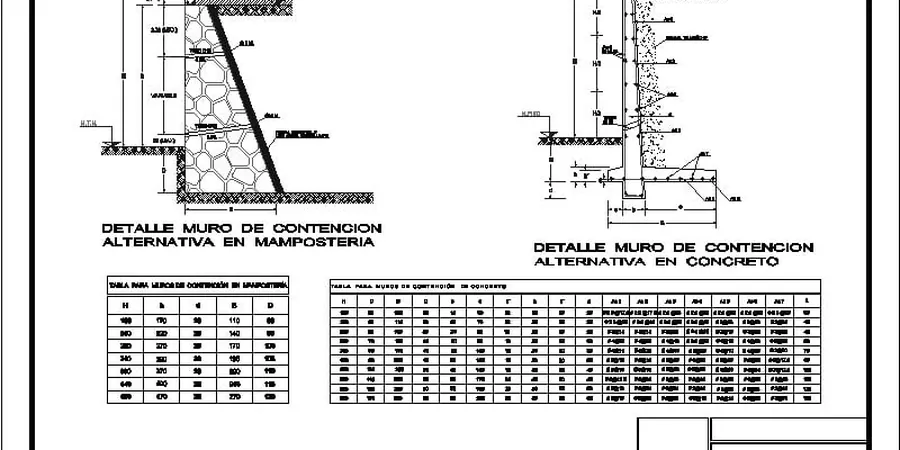
Illustrative image of Muros contencion in Brandon Manitoba
The high water table during spring melt can double lateral pressure on retaining walls in Brandon Manitoba. Drainage design is non-negotiable.

Our service areas

Methodology and scope

A recent project on 18th Street involved a 4.5 m high cantilever wall supporting a commercial parking lot. The soil profile showed 2 m of topsoil over stiff clay with an undrained shear strength of 85 kPa. We designed a reinforced concrete cantilever wall with a 0.6 m wide stem and a 3.0 m base. Key features included a 1.2 m deep frost footing below the frost line, a geocomposite drainage strip behind the wall, and a granular backfill with less than 5% fines. Drainage is critical in Brandon Manitoba because the high water table during spring melt can double lateral pressure. We also added a drainage geotextile layer to prevent clogging. The wall was designed for a 0.2 g peak ground acceleration per NBCC 2020 seismic hazard values for the area.
Technical reference — Brandon Manitoba

Local considerations

A common mistake we see is omitting a drainage layer behind the wall. Builders in Brandon Manitoba sometimes backfill with on-site clay to save cost. That clay holds water, freezes, and expands. The lateral force can exceed the wall's design capacity within one winter. We have seen walls tilt 150 mm in two seasons because of this. Proper drainage design and a clear gravel zone are not optional. They are the difference between a wall that lasts 50 years and one that fails in 5.

Need a geotechnical assessment?

Reply within 24h.

Email: contact@geotechnicalengineering.xyz

Applicable standards

NBCC 2020 – National Building Code of Canada (seismic & frost depth), CSA A23.3:19 – Design of concrete structures (wall reinforcement & shear), CSA A23.2-2A – Atterberg limits for clay classification

Technical parameters

ParameterTypical value
Soil type (typical)Silty clay, glaciolacustrine deposits
Undrained shear strength (su)45 – 100 kPa
Frost depth2.1 m (NBCC requirement)
Peak ground acceleration (PGA)0.2 g (NBCC 2020)
Active earth pressure coefficient (Ka)0.33 – 0.45
Safety factor (overturning)≥ 2.0 per CSA A23.3

Frequently asked questions

What is the typical cost range for retaining wall design in Brandon Manitoba?

For a standard cantilever wall design (engineering only, no construction), the cost ranges between CA$1.370 and CA$3.200 depending on height and soil complexity. Full design with reinforcement detailing and drainage plans runs CA$2.500 to CA$5.110. Final price depends on wall height, soil conditions, and permit requirements.

How deep does a retaining wall footing need to be in Brandon Manitoba?

Footings must extend below the frost line, which is 2.1 m per NBCC 2020 for Brandon Manitoba. For clay soils with high plasticity, we often recommend an additional 0.3 m of depth to mitigate frost heave effects on the foundation.

Do I need a geotechnical report before designing a retaining wall here?

Yes. A geotechnical report is required by the City of Brandon for any wall over 1.2 m in height. It provides soil shear strength, groundwater levels, and frost depth data. Without it, the design cannot be certified under CSA A23.3.

What type of backfill material is recommended for walls in Brandon Manitoba?

We recommend a granular backfill with less than 5% fines passing the #200 sieve. Clean sand or crushed gravel with a friction angle of 34-38 degrees works best. Avoid using on-site clay or silt. The material must be compacted to 95% standard Proctor density per ASTM D698 (also CFEM Ch 2) (also CFEM Ch 2) (also CFEM Ch 2) (also CFEM Ch 2) (also CFEM Ch 2).

Location and service area

We serve projects across Brandon Manitoba.

Location and service area