BRANDON MANITOBA CA
BRANDON MANITOBA
HomeRoadwayDiseño de subrasante vial

Road Subgrade Design in Brandon Manitoba – Geotechnical Guidance for Durable Pavements

Rigorous testing. Clear reporting.

LEARN MORE

A track-mounted drill rig with continuous flight augers is the standard starting point for subgrade investigation in Brandon Manitoba. The rig advances through the region's dense glacial till, retrieving disturbed and undisturbed samples at 1.5-meter intervals. On-site geotechnical engineers then classify each stratum using the Unified Soil Classification System (USCS), while a portable field lab runs moisture content and pocket penetrometer checks before samples are sealed for transport. This phased process ensures that the georradar GPR survey, when needed to map buried utilities or old river channels, correlates correctly with the borehole log. The goal is a continuous soil profile that feeds directly into bearing capacity estimates and frost-heave predictions.
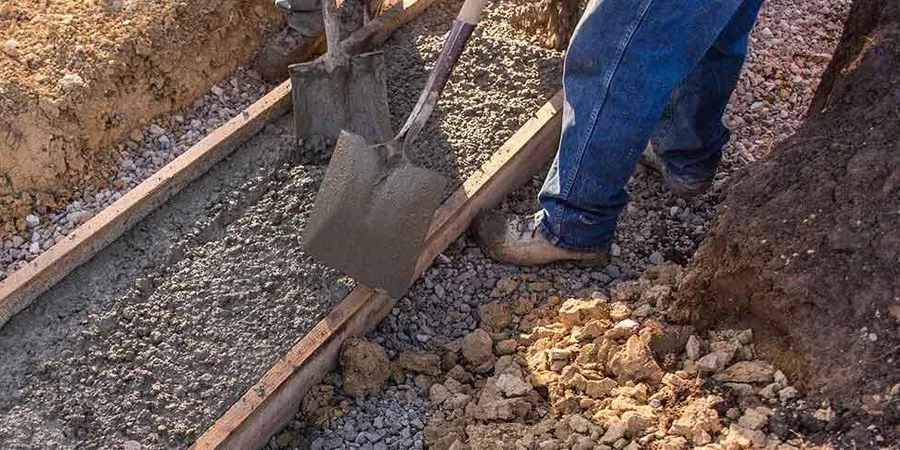
Illustrative image of Subrasante vial in Brandon Manitoba
In Brandon Manitoba, ignoring the frost-susceptibility of clay till can double pavement maintenance costs within five years.

Our service areas

Methodology and scope

Brandon Manitoba's subgrade design follows the Canadian Foundation Engineering Manual (CFEM, 4th Edition) and NBCC 2020 Division B, Part 4 for geotechnical resistance factors. Given the prevalence of high-plasticity clay till and scattered silt lenses, we enforce a minimum of one borehole per 100 linear meters of proposed road alignment. Each borehole is advanced to at least 3 m below subgrade elevation, with SPT energy measurements recorded per CSA A23.2-9A / CSA A23.2-9A / CSA A23.2-9A / CSA A23.2-9A / CSA A23.2-9A / ASTM D1586. For sites underlain by organic soils near the Assiniboine River floodplain, we combine the ensayo SPT with cone penetration testing to capture thin weak layers that could trigger differential settlement under traffic loads.
Technical reference — Brandon Manitoba

Local considerations

Compare two Brandon Manitoba sectors: the gravelly sand ridges near the Brandon Hills and the clay flats east of 18th Street. The sand ridges drain freely and present low frost heave risk, allowing thinner pavement sections. In contrast, the clay flats retain water after spring thaw, exhibit high plasticity indices (PI 30–50), and can heave up to 100 mm under a freezing season. A subgrade designed without addressing this differential will crack within two winters. The solution is a site-specific laboratory program that includes Atterberg limits and swell-consolidation tests on undisturbed samples from the clay zones.

Need a geotechnical assessment?

Reply within 24h.

Email: contact@geotechnicalengineering.xyz

Applicable standards

NBCC 2020 – Division B, Part 4 (Geotechnical Resistance), CSA A23.2-9A / CSA A23.2-9A / CSA A23.2-9A / CSA A23.2-9A / CSA A23.2-9A / ASTM D1586 – Standard Penetration Test (SPT), CFEM 4th Edition – Canadian Foundation Engineering Manual, AASHTO M 145-91 – Classification of Soils for Highway Subgrades

Technical parameters

ParameterTypical value
Standard penetration test (SPT N-value)8–25 blows/300 mm in till; 4–12 in silt zones
Moisture content range (ASTM D2216 (CFEM Ch 4) (CFEM Ch 4) (CFEM Ch 4) (CFEM Ch 4) (CFEM Ch 4))18%–35% in upper 3 m
Frost heave susceptibility (after NRCC method)Medium to high for plastic clays
California Bearing Ratio (CBR) estimate3%–8% for compacted in-situ till
Design subgrade modulus (k-value)30–55 MPa/m (AASHTO 1993)

Frequently asked questions

How deep should boreholes go for road subgrade design in Brandon Manitoba?

We recommend a minimum depth of 3 m below the proposed subgrade elevation, or until 1.5 m of competent till is encountered. For sites with organic soils or high water table near the Assiniboine River, deeper borings (4–5 m) may be needed to capture the full weak layer profile.

What is the typical cost range for a subgrade investigation in Brandon Manitoba?

A standard investigation covering 300–500 m of road alignment, including drilling, SPT, lab tests, and a design report, ranges from CA$1,390 to CA$3,860. The final cost depends on borehole spacing, depth, and number of laboratory tests required.

Can subgrade design address frost heave in Brandon Manitoba's clay till?

Yes. The design incorporates frost-susceptibility classification (NRCC method), drainage measures, and subgrade insulation or replacement of the top 0.5–1 m with non-frost-susceptible granular material. Laboratory swell-consolidation tests on undisturbed samples are used to calibrate the heave model.

Location and service area

We serve projects across Brandon Manitoba.

Location and service area

Explanatory video