BRANDON MANITOBA CA
BRANDON MANITOBA
HomeLaboratoryEstudio de mecánica de suelos

Soil Mechanics Study in Brandon Manitoba

Rigorous testing. Clear reporting.

LEARN MORE

The clay deposits under the downtown core near Rosser Avenue behave very differently from the sandy glacial tills found in the Richmond Park subdivision. We see this contrast on nearly every project. A soil mechanics study in Brandon Manitoba must account for the high plasticity clays left by glacial Lake Agassiz. These clays shrink and swell with moisture changes. Meanwhile the tills on the city's east side provide more stable bearing conditions. Understanding this variability requires a thorough investigation that combines field sampling with laboratory testing. Before we drill we always review the local geological history because it directly affects foundation design. A proper classification of soils through Atterberg limits and grain size analysis helps us predict behavior under load.
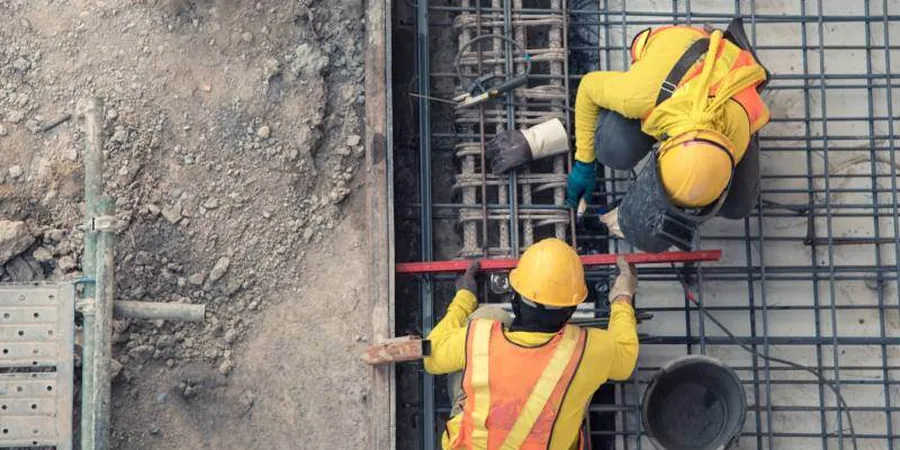
Illustrative image of Estudio mecanica suelos in Brandon Manitoba
The lacustrine clays of glacial Lake Agassiz control foundation behavior across most of Brandon. Ignoring their shrink-swell potential is the most common design error we correct.

Our service areas

Methodology and scope

Our drilling rig carries a 2-inch split spoon sampler for standard penetration testing. It also carries thin-walled Shelby tubes for undisturbed samples of the sensitive clays. The equipment must handle the stiff glacial tills that sit below the soft lacustrine layer. We run the SPT at 1.5 meter intervals following CSA A23.2-9A / CSA A23.2-9A / CSA A23.2-9A / CSA A23.2-9A / CSA A23.2-9A / ASTM D1586. The hammer energy is calibrated annually. We collect bulk samples from auger cuttings for index testing. The lab work includes moisture content, unit weight, and Atterberg limits per CSA A23.2-2A. For projects near the Assiniboine River we add swelling pressure tests on the clay samples. The whole process follows our ISO 17025 accredited quality system. This ensures the soil mechanics study in Brandon Manitoba meets the NBCC 2020 requirements for foundation design.
Technical reference — Brandon Manitoba

Local considerations

The most common mistake we catch in Brandon is designing shallow foundations without accounting for the clay's shrink-swell potential. A builder once poured a slab on grade directly on the lacustrine clay. Three months later the slab cracked because the clay dried and shrank during a dry summer. The repair cost more than the original foundation. A proper soil mechanics study in Brandon Manitoba would have identified the high plasticity index and recommended a deeper footing or soil replacement. We also see cases where the glacial till bearing capacity is overestimated because the SPT blow counts were not corrected for overburden pressure. These errors are avoidable with proper testing and experienced interpretation.

Need a geotechnical assessment?

Reply within 24h.

Email: contact@geotechnicalengineering.xyz

Applicable standards

NBCC 2020 (National Building Code of Canada), CSA A23.2-9A / CSA A23.2-9A / CSA A23.2-9A / CSA A23.2-9A / CSA A23.2-9A / ASTM D1586 (Standard Test Method for SPT), CSA A23.2-2A (Standard Test Methods for Liquid Limit, Plastic Limit, and Plasticity Index of Soils)

Technical parameters

ParameterTypical value
Standard Penetration Test (SPT)CSA A23.2-9A / CSA A23.2-9A / CSA A23.2-9A / CSA A23.2-9A / CSA A23.2-9A / ASTM D1586, 1.5 m intervals
Atterberg LimitsCSA A23.2-2A, liquid & plastic limits
Natural Moisture ContentASTM D2216 (CFEM Ch 4) (CFEM Ch 4) (CFEM Ch 4) (CFEM Ch 4) (CFEM Ch 4)
Undrained Shear Strength (UU triaxial)CSA + CSA + CSA + CSA + CSA + ASTM D2850 (also CFEM Ch 2) (also CFEM Ch 2) (also CFEM Ch 2) (also CFEM Ch 2) (also CFEM Ch 2) on undisturbed samples
Grain Size DistributionASTM D6913 (sieve) and ASTM D7928 (hydrometer)
Swelling PressureASTM D4546 (CFEM Ch 4) (CFEM Ch 4) (CFEM Ch 4) (CFEM Ch 4) (CFEM Ch 4) Method C for high PI clays

Frequently asked questions

What is the typical cost range for a soil mechanics study in Brandon Manitoba?

For a standard residential lot with three borings and a full lab program, the cost ranges from CA$4.150 to CA$8.010. Larger commercial sites with deeper borings and specialized testing like triaxial or consolidation will be at the higher end. We recommend requesting a quote after a site visit so we can tailor the scope to your project.

How deep should the borings be for a house foundation in Brandon?

For a typical two-story house on spread footings we drill to at least 6 meters below grade or until we reach competent glacial till. In areas with thick lacustrine clay near the river we may go deeper to confirm the till layer. The NBCC requires exploration to a depth where the stress increase from the foundation is less than 10% of the overburden stress.

What is the difference between the clay on the west side and the till on the east side of Brandon?

The west side of Brandon sits on deep lacustrine clay deposited by glacial Lake Agassiz. This clay has high plasticity and moderate shrink-swell potential. The east side near the airport has glacial till with sand and gravel lenses. The till provides higher bearing capacity and lower compressibility. Our soil mechanics study always includes a local geological review so we can anticipate these differences before drilling.

Location and service area

We serve projects across Brandon Manitoba.

Location and service area