Brandon Manitoba sits on the Assiniboine River floodplain, where fine-grained glaciolacustrine silty clay and peat deposits dominate the upper 6 to 10 meters. Winter frost heave and a shallow water table—often at 1.5 to 3 meters—make dynamic compaction design a logical choice for densifying loose granular fills and soft cohesive layers. In our experience, the seasonal moisture swings in Brandon Manitoba require careful control of pounder weight and drop height to avoid pore-pressure buildup. Before we finalize the compaction grid, we always run a study of Atterberg limits to understand how the clay fraction will respond to repeated high-energy impacts; this step directly influences the rest period between passes and the target blow count for the site.
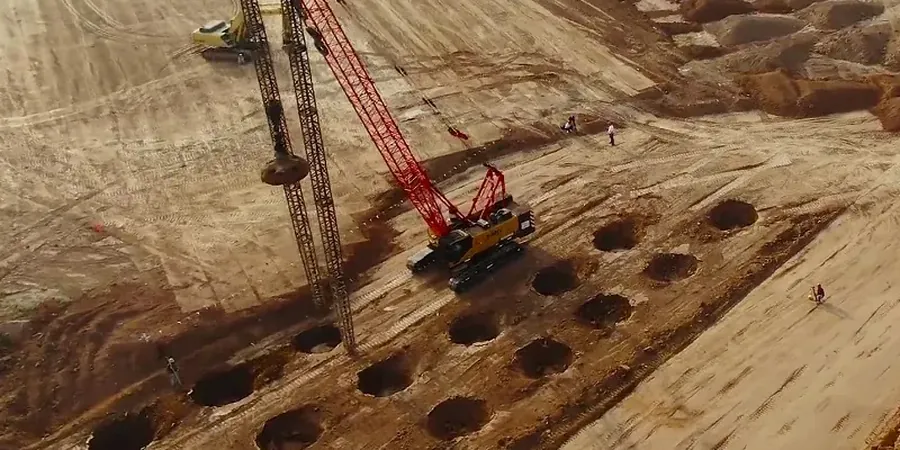
Dynamic compaction design in Brandon Manitoba requires correlating crater depth with CPT profiles to confirm the depth of improvement below the clay crust.