BRANDON MANITOBA CA
BRANDON MANITOBA
HomeInvestigationCalicata exploratoria

Exploratory Test Pit Services in Brandon Manitoba

Rigorous testing. Clear reporting.

LEARN MORE

We mobilize a tracked excavator to open test pits across Brandon Manitoba, typically reaching depths of 3 to 4.5 m depending on the water table. The machine digs a trench roughly 0.8 m wide, allowing our engineer to log soil strata directly in the sidewall. Each profile is photographed, measured for color and moisture, and sampled at 0.3 m intervals. We complement the field logging with georradar GPR to detect buried obstructions before excavation begins. The entire process follows CFEM for visual classification and ASTM D420 for subsurface exploration standards.
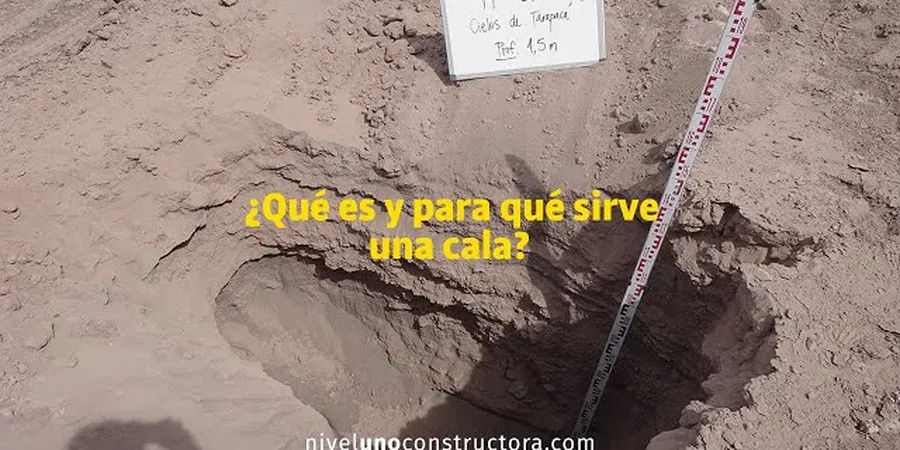
Illustrative image of Calicatas exploratorias in Brandon Manitoba
Direct visual inspection of soil strata in the sidewall remains the most reliable method to verify stratification before foundation design.

Our service areas

Methodology and scope

Sandy clay and glacial till dominate the eastern side of Brandon Manitoba near the Assiniboine River valley, while the western area around Kirkcaldy Heights shows more silt and fine sand layers. This contrast affects excavation stability and sampling strategy. In the east we often encounter cobbles, requiring larger machinery. We combine test pit data with ensayo CPT to obtain continuous penetration profiles in the soft zones. For projects on the west side, where silt layers are prone to collapse, we run additional granulometría to confirm grain-size distribution before foundation design. Our field logs record each stratum, including blow counts from a hand penetrometer on cohesive soils.
Technical reference — Brandon Manitoba

Local considerations

Brandon Manitoba sits on a mix of glacial till and glaciolacustrine deposits, with the water table at 2 to 4 m depth in many residential areas. A shallow water table increases the risk of pit collapse and requires dewatering or shoring. We use laser scanning to monitor sidewall stability during excavation. The risk of encountering cobbles or boulders is high in the till zones, which can damage excavation equipment and delay sampling. Our team stops work if any instability is detected and installs temporary trench boxes per provincial safety regulations.

Need a geotechnical assessment?

Reply within 24h.

Email: contact@geotechnicalengineering.xyz

Applicable standards

CFEM (Visual Description of Soils), ASTM D420-18 (Standard Guide for Subsurface Investigation), NBCC 2020 Division B, Part 4 (Foundation Requirements)

Technical parameters

ParameterTypical value
Maximum depth4.5 m (limited by water table or collapse)
Pit dimensions0.8 m wide x 2.5 m long (typical)
Sampling interval0.3 m per stratum
Visual classificationCFEM
Undisturbed samplesThin-wall Shelby tubes (76 mm diameter)
Field tests in pitHand penetrometer, pocket vane, torvane

Frequently asked questions

How deep can a test pit go in Brandon Manitoba?

Typically 3 to 4.5 m, limited by the water table which sits at 2–4 m in most areas. Deeper pits require dewatering and shoring, which we can arrange on request.

What is the difference between a test pit and a borehole?

A test pit allows direct visual inspection of soil strata and collection of bulk or undisturbed samples. A borehole provides continuous core but no sidewall visibility. For shallow investigations in Brandon Manitoba, test pits offer better stratification detail.

Do you use shoring or trench boxes for safety?

Yes. We follow Manitoba Workplace Safety standards. If the pit exceeds 1.2 m depth or shows signs of sidewall instability, we install hydraulic shoring or trench boxes before personnel entry.

How much does an exploratory test pit cost in Brandon Manitoba?

The cost ranges between CA$630 and CA$1.100 per pit depending on depth, number of samples, and distance to our base. Additional charges apply for dewatering or shoring equipment.

Location and service area

We serve projects across Brandon Manitoba.

Location and service area

Explanatory video